Friday, March 18, 2011

The Art of Racing in the Rain (Garth Stein)

By Emily Zilm

I haven’t read a book narrated by an animal since I was in grade school. Yes, it was The Hundred and One Dalmatians. Classic. The Art of Racing in the Rain is also told from a dog’s perspective, but it’s for grown ups. This one is less like an adorable animated film and a little more like Air Bud got together with a Nicholas Sparks novel and made a baby, though.

The Art of Racing in the Rain by Garth Stein follows Enzo the dog’s perception of the life of his owner, Denny,  a husband, father and aspiring race car driver. Once I got past all the mental pictures of a dog with a CGI mouth that speaks to humans who can’t hear him, there was a rather cliche but decently crafted story under there about struggle and not giving up.

Denny works at an upscale auto shop and dreams of getting a seat driving in a Formula One race and finishing first. He has a young daughter, Zoe, and a wife, Eve, whose parents think he’s not a good enough husband or father. When Eve is diagnosed with brain cancer (Enzo smelled it long before, as dogs do), a string of seemingly overwhelming obstacles threatens to forever block his road to success. I won’t tell you how the whole scenario unfolds, but it’s all pretty predictable as each point of conflict is heavily foreshadowed. Stein doesn’t seem to be one for surprising readers, so do not prepare to have your mind blown.

In general, I wasn’t sold on the idea of a dog narrating this book from the start, and at times it seemed contrived and gimmicky. However, if the lovable Enzo weren’t telling the story this would probably be just another so-so novel about a guy having a hard time in his life. Enzo’s voice added a certain charming quality to the story and it’s delivery. It also provided opportunities for clarity, impartiality, or humor in places that wouldn’t have been possible otherwise. However, I would have liked to see Stein really hone in on Enzo’s role as storyteller to convey the meaning and emotion behind the plot. Enzo just seemed too human. He even remarks throughout the entire book about his desire to be human and expresses feelings of resentment about not being able to help people in the ways they help each other. This does ultimately have a purpose in regards to the plot, yet it seemed as though Stein missed opportunities to really use Enzo’s voice as a lens through which the reader could view the story from a truly different perspective. Despite my underwhelmed attitude towards the book as a whole, there were instances in which Enzo’s inability to control his actions did make me laugh, and his raw emotions made me truly angry or sad alongside the other characters.  

Rating
The Art of Racing in the Rain
By Garth Stein

Style - 4.3 
It was really hard for me to get past the cheesy aspects of the dog narration, but I eventually did. Most books like this usually fall clearly on one side of the line between smart and lame, most on the latter side, but this one manages to straddle it. It had all the cliche aspects that I expected, but at most times where I was sure I’d find a shortcoming or hole in the story, I didn’t. And despite the heavy foreshadowing and all of the repetition of  inspirational race car driving metaphors, Stein managed to maintain a nice flow. It was an easy read with little thought required of the reader. Also, I do most of my reading during my hour-plus-each-way daily commute on the bus and train with multiple transfers, so I really appreciated that all the chapters were short.

Story - 4.0 
This book does not have the most complex or original story, and it’s easy to anticipate what comes next. Sure there are a lot of cliche elements that can get irritating, but what I like about this story is that it doesn’t try to be anything it’s not. It’s the kind of story you can read with your brain on autopilot and not miss anything because there are no deeper layers.

General - 4.0
Overall it’s a really lighthearted, yet serious and emotional story about a man, his dog,  his family, his career, and his struggle to balance his love for each while keeping his head up in the face of hardship. If you’re looking for a great, earth-shattering masterpiece then you should keep looking. But if you’re in the mood for a really quick, relaxing read, then you might consider The Art of Racing in the Rain. It’s like one of those movies you flick on during a Sunday afternoon because you don’t have to think too much about it. Reading it won’t change your life, but it passes the time.

Overall - 4.1

Friday, March 11, 2011

The Nightly News (Jonathan Hickman)

by Thom Dunn

"The VOICE says: When killing activists, never shoot for the head, always aim for the heart"

Jonathan Hickman has received a bit of attention as of late for killing off the Human Torch in the monthly ongoing Fantastic Four comic book series. But before becoming one of the Architects of the Marvel Comics Universe, Hickman first made his mark on the world of graphic literature in 2008 with a creator-owned book called The Nightly News.

The Nightly News is the story of a cult of domestic terrorists referred to as the Brotherhood of the Voice that is determined to take down the American news media. Each member of the Brotherhood has had his or her life destroyed by subjective reporting — by becoming stories, rather than facts. The book deals heavily with themes of indoctrination and control — both the ways in which the news media influences the masses, and the ways in which The Voice (standing in for any cult leader) manipulates his own subjects. It is propaganda about propaganda, a sprawling conspiracy thriller set against a backdrop of contemporary politics and frighteningly modern issues, full of ideas that challenge and question the status quo.

But not without challenging and questioning itself first.

From the book's subtitle, "A Lie Told In Six Parts," to the clever footnotes on the first page of every chapter ("Note: All violence in this book should not be considered a reflection of the author. I give to charities, play with children, and love cooking"), Hickman constantly calls his own authorial reliability into question, which only further enforces the labyrinthine manipulations and wheels-within-wheels that the narrative claims to be exploring. For the most part, the story is told from the point of view of the leader of the cult, The Hand of the Voice. Thus, as a reader, it is our initial inclination to accept or agree with the things that we are being told — but then something about the narrative makes you realize that this is precisely the kind of dogma fed to and by fanatics or extremists. And then you realize just how easily you went along with it yourself. And worse, that maybe there's a part of you that agrees with these extremist views.

This opaqueness and ambiguity is greatly assisted by Hickman's incredible artwork. It is not a comic book, nor a sequential narrative; The Nightly News is an impressive piece of graphic literature. The artwork is a breathtaking amalgamation of infographics (charts and facts that are just as apocryphal as the rest of the narrative), photo-renderings, comic art, and words that together weave a story of intrigue and deception that constantly looks back in upon itself. A single page might treat you to talking heads with dialogue bubbles, first person narration from The Hand of the Voice, interjections or "facts" from the Voice itself, plus facts about corporate ownerships, and a few witty asides from a disembodied "authoritative" first-person (whom we are led to believe is Hickman himself, but can we ever really be sure?). The sequence of events in a given page is often ambiguous, which echoes the theme of manipulation within the story and recreates the experience for the reader while also rewarding multiple re-readings. Jonathan Hickman truly pushes the limit of what is possible with graphic narrative.

The only real drawback of the story is in the development of the characters. Hickman himself claims in the afterword of the book that the large cast is "often intentionally ambiguous," and while this certainly resonates with the thematic nature of the story, it makes it difficult to connect with any of the characters. The highly stylized nature of the artwork also makes it difficult sometimes to distinguish between characters (note: pay close attention to the limited color palette used in each scene). It is the ideas that drive this story forward, with help from the plot; the characters only exist as a means to deliver both of these things to the reader. Still, I cannot help but think that an emotional anchor with which a reader could more easily sympathize would have greatly helped the story. While I do not doubt that this was at least somewhat intentional on Hickman's part, it nonetheless makes it harder for a reader to get a grasp on an already challenging and onerous tale.

Rating
The Nightly News
by Jonathan Hickman

Story: 5.7
While a story told (mostly) from the point of view of political extremists is certainly intriguing, Hickman loses points in this area due to the lack of distinct character development. As mentioned, it is the ideas that drive the reader's interest more than the story.

Style: 10
Simply put, The Nightly News is absolutely unlike anything you have ever read. It is a unique marriage of graphic design and words that sends you spiraling down a rabbit's hole that lands you back on top of yourself, before falling through the hole again in an endless loop.

General: 7.8
The Nightly News has layers enough to captivate nearly any willing reader, and while it might seem off-putting at first, it is well worth the journey. It doesn't answer any questions, and it's possible it won't even give you any new ideas, but it will certainly make you think. Some people might scoff at its dogma, but once you reach the end, you'll find yourself wondering just what Hickman's agenda was along...

Overall: 7.83

Read a free preview of Chapter 1 (pdf)

Friday, March 4, 2011

All the King's Men (Robert Penn Warren)


By Melanie Yarbrough

Synopsis

This is the story of the rise and fall of Willie Stark, who strikes a resemblance to the real-life Huey "Kingfish" Long of Louisiana. Published in 1946, perhaps the story of a politician who starts out with the best intentions and ends in corruption seems a bit dated. Put Jon Stewart and Stephen Colbert on pause for a moment, and watch it happen in Robert Penn Warren's beautiful and harsh look into the difficulties of making everyone happy, including yourself.

Willie Stark is a familiar guy, especially if you're from the South like I am. He understands what his constituents want because he is one of them. It may sound like a page right out of W or Palin's campaign books, but the story of Willie Stark is rich with predicament and the kinds of justifications that pile on top of one another until the whole house is different from the blueprints.

Side note: While I've never seen any of the movies, it is my understanding that Sean Penn plays Willie in one of them. Please don't hold that against the book.

Rating
All the King's Men
By Robert Penn Warren

Story: 5.5 - While not the most original of stories, Warren's beautiful descriptions and strong, sympathetic characters take over the story and make it their own.

Style: 7.3 - Warren manages dialect without cheap apostrophes or misspelled words. The Southern drawl is present in the dialogue, and the heat of the setting is present in the descriptions. He does not rush through the story, instead allowing you to savor each bit.

General: 8.5 - The book didn't win the Pulitzer for nothing. This story has been told, will be told, and will occur in real life again and again. Whether or not it will be told in such a beautiful, patient, or sufficient way remains to be seen.

Overall: 7.1

Note on versions of the book: There are some versions that use a different name than "Willie Stark." I'm not sure the origin of this change, but I can tell you that I have read parts of the version with the different name and it doesn't read as well as the Willie Stark version. The cover pictured above is the book I read.

Friday, February 25, 2011

Unimaginable (Tom Pinchuk/Kurt Belcher)

You may remember Tom Pinchuk from last year's Why Buy Hybrid Bastards!? segment. His newest OGN, Unimaginable, just hit stores this week, and is every bit as quirky and high-concept as his past efforts.

Synopsis

In Unimaginable, strange girl named Stump wakes up in a dream world where she is put to work as a Solver, someone who is tasked with solving problems of all sizes and natures. She is aided by two cooky Solver sidekicks, Lank and Chin, who insist on following the rule book when confronting each problem. Stump, on the other hand, uses her own mix of common sense and absurd logic to overcome the obstacles she faces. Behind all of these problems are the Unimaginables, creatures so terrifying and powerful that no one can even imagine who, what, when, where, why, or how they are. Stump and her fellow Solvers must come up with creative ways to thwart the Unimaginables ever more complicated and dangerous schemes.

What makes Unimaginable unique is the accessibility of the metaphors at play throughout the story. While not necessarily marketed as a children's book, the playful tone and proverbial nature of the protagonist's challenges are reminiscent of morally-centered children's fare. Stump faces her problems head on, and encourages her accomplices to not be afraid of coming up with innovative solutions. It's actually quite charming how Pinchuk keeps the allegorical problem-solving nature of his plot so readily accessible on the surface of the narrative.

There are plenty of cute moments in the book where characters use dream logic or some other absurd literalism to solve a problem, but really you want to read this one for the overall message. Kurt Belcher's art is a bit chaotic, and the lettering leaves much to be desired. If you can get into the story, though, those things can be overlooked. I wouldn't recommend Unimaginable if you're a die-hard comics fan looking for a challenging or powerful read, but this book seems like it would be a fantastic choice for introducing a younger reader to the medium.

Rating

Unimaginable
by Tom Pinchuk and Kurt Belcher

Story—6.67
Not very challenging, but a cute and quirky concept that the plot clings to genuinely.

Style—6.83
Belcher's art is not for everyone, but it certainly has a distinct style, and Pinchuk's writing is clear and easy to follow.

General—7
If you've got a young one at home who you're trying to get interested in comics, or reading in general, Unimaginable would be a great place to start. That is probably the exact opposite response that one would have to Tom Pinchuk's previous OGN, Hybrid Bastards!, which shows that the man's got range.

Overall—6.83


Keep reading, Genoshans!

Friday, February 11, 2011

THE BOOK OF LIES by Brad Meltzer

Synopsis

Despite being the most well-known murder of all time, the weapon with which Cain killed his brother Abel remains unknown. The Bible is vague on Cain's ultimate fate as well — while we know that God reprimanded him for his actions, it is not revealed how or when he actually died.

On an unrelated note, Mitchell Siegel, father of SUPERMAN creator Jerry Siegel, was mysteriously shot and killed when Jerry was young. Neither the murderer nor the murder weapon were ever identified; in interviews, Jerry would tell that his father died of a heart attack.

If you've ever wondered about the connection between the original Biblical murder and issue #1 of SUPERMAN IN ACTION COMICS, then Brad Meltzer's got your ticket. He took two seemingly unrelated stories and through them weaved a labyrinthine conspiracy thriller, a Da Vinci Code for comic book fans, except good.

The story follows Calvin Harper, a former Homeland Security officer who now works for a homeless shelter in Miami, driving around in a van and picking up vagrants off the street. One night he comes upon his estranged father in a park with a fresh bullet wound. Calvin doesn't trust this as a chance meeting, and soon finds himself wrapped up in an elaborate search for Cain's original murder weapon (an artifact that could potentially uproot the entire Christian establishment), with nothing but a mint condition copy of ACTION COMICS #1 as his guide. Meanwhile, he and his father are pursued by a devoted Cain worshipped named Ellis Belasco. (CALvin and ELlis? Get it?...oh. Ya know, don't worry about it)

Brad Meltzer is a talented writer; you'd be hard pressed to find anyone who would argue with that fact. I had heard nothing but high praise for him, with reputable creators touting him as "a master of structure," and so forth. Even the trailer for the book (below) features Damien Lindolf, Joss Whedon, and Brian K. Vaughan worshipping at the altar of Meltzer. As such, I was initially disappointed in The Book of Lies, because it was only good. It's nothing groundbreaking, nothing that will be studied in universities for years to come and mined for its literary richness.

But as I continued reading and found myself wrapped up and intrigued by the story, I realized — that's okay. Not every story has to blow my mind open and change the way the world looks. I started the book with unfairly high expectations, but ultimately enjoyed myself. Brad is a master plotter capable of writing sleek and thrilling prose. The characters never felt truly real and alive, but they were richly developed enough to service the story, and each fulfill their given roles. I cared less for them than I did for the Byzantine conspiracy that drove them, but I didn't mind letting them guide me there either.

REVIEW

The Book of Lies
by Brad Meltzer

Style — 6.0
Meltzer is clearly a competent writer, but his prose isn't particularly colorful or imaginative. It's effective and thrilling, but not especially fanciful. He does lose points, however, for including multiple lines of dialogue like, "This isn't just some action movie cliché!" or "This isn't like some covenient thriller novel, this is serious!" As you can probably guess, everytime a character uttered something along those lines, it actually was a typical action/thriller movie/novel moment. Which is fine, but pointing it out to me (even if the irony wasn't intentional) pulled me straight out of the story, every time. I was also bothered by the inconsistency of perspective — different chapters were told from different characters' points of view, but the Calvin chapters were in First Person, while everyone else was in Third, and there was really no reason for this (especially since there were a few parts that focused on Calvin written in Third Person). It may just be me, but I generally prefer my perspectives to be all or nothing.

Story — 6.8
The clever and creative connection between the murder of Abel and the first issue of Superman, and the accompanying conspiracy of Bible re-interpretations was endlessly captivating. Meltzer certainly did his research, and keeps the mysteries coming all the way through the end, slowly revealing his cards and twisting the plot around more. It's a great idea, and the plotting is masterfully executed. That being said, the characters hardly mattered to me at all — I just wanted to knew the truth about the relationship between Cain and Superman.

General — 6.7
Once I got over my expectations for the book to be the modern day Ulysses, I really enjoyed it. It was an easy read, always entertaining, and endlessly intriguing. If I had found this on the paperback rack at the airport, I would have thought it was incredible. Meltzer is certainly a step above your average paperback thriller, but certainly not yet in the upper echelon of literary masters. He just writes really enjoyable books, and if you're looking for a good read, it's absolutely worth checking out.

Overall — 6.5

Friday, February 4, 2011

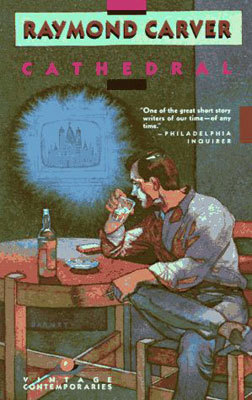
Cathedral (Raymond Carver)

Cathedral is Raymond Carver's fourth short story collection. Though the collection is most famous for its title story, each story reveals Carver's talent and dedication to the ordinary as extraordinary.

Synopsis

If you're unfamiliar with Carver's work or style, I am tempted to ask what is wrong with you. That being said, you have an exciting opportunity to delve into the works of one of my favorite short story writers. His intensity and deceitfully quiet writing never fails to wake me up to the hidden meanings in everyday life or just knock me out of whatever writing slump I'm in at the time. From genuinely funny and charming characters in "Feathers" (one of my favorites) to the eerie sound of a phone ringing in "A Small, Good Thing," Cathedral explores the gamut of human failure and, thus, emotion.

Highlights

It's hard to review a collection of short stories without being tempted to write about each story, which would be tedious and besides the point. Instead I'll highlight some of my favorite stories, ending with the most famous title story that closes the collection.

"Feathers"

Never has a short story made me laugh harder than this one. Carver manages to write about a woman who keeps her old jacked up teeth on a TV, a peacock, and an ugly baby without ever leaving the realm of reality or believeability. The couples in this story aren't perfect; each half of each couple has their flaws and Carver shows them to us not merely to endear them to us, but to explain what lies ahead of them. He hints at a bleaker future, when all of the hope and optimism that they experience in one night has been drained from them. Rather than sucking the joy out of the happiness they do get to experience, however, Carver skillfully displays the ebbing and flowing of life and the futility of trying to guess what's ahead.

"Preservation"

This story strikes me as relevant to the current economic state in America. Though this collection was published first in 1981, the themes and despair in "Preservation" rings true today. There is a universality to hopelessness that transcends time and circumstances, and Carver was a master at relaying that in his stories. The narrator's husband loses his job, and the rest of the story is the slow descent that occurs afterward. The story is strongest in its unexpected moments. The narrator is strong, but not stronger than the forces against and we can't help but watch and wait, guessing which straw will be the one to break her back.

"Cathedral"

In this, one of Carver's most famous stories, there is just as much misunderstanding and miscommunication as in his other stories, but there is an underlying hope that makes it a lighter note to end the collection on. The narrator grapples; there is the understanding of blindness and an attempt, rather than a resignation, to communicate.

Rating

Cathedral
by Raymond Carver

Stories: 10 - This is one of my favorite collections of Carver's stories, as it travels the range of his humor and his despair.

Style: 9 - You can't help but read Carver with the background filter of how autobiographical his writing is. Stories like "Chef's House" and "Where I'm Calling From" hit closer than close to home, and his quiet and honest style resonates long after the story is through.

General: 10 - I'm biased; Carver has played a major role in my growth as a writer, as a reader, and as a writer who reads.

Overall: 9.67 - Take this glowing review with a grain of salt, but only after you've read the collection for yourself.

Friday, January 28, 2011

Great Expectations (Charles Dickens)

Spoiler Alert: Great Expectations is a fantastic book. I mean, it's Dickens. Everyone should read Dickens. This review is less about the quality of a novel already widely accepted as the work of a master craftsman, and more about how I read the book. Let me explain.

Synopsis?

Two highly influential events occurred almost simultaneously at the end of 2010. First, on December 2, 2010, Oprah Winfrey announced her 65th selection to her infamous book club. The new addition, actually two books, was the Penguin deluxe double edition of two Charles Dickens classics, A Tale of Two Cities and Great Expectations. The selection was slightly controversial—at least to those interested in such things—because it was only the second book selected in 2010 (Jonathan Franzen's Freedom being the first), and only the fifth since the beginning of 2008. To choose a pair of undeniable classics such as these was an extremely safe bet for Oprah's Book Club, which has arguably yet to recover from the fallout of James Frey's A Million Little Pieces scandal of 2005. Oprah even went so far as to admit on her show that she had never read Dickens before. Hmm, I wonder how much Penguin had to shell out to make the list...

The second event that brought me to this week's read was the much-anticipated launch of Google Books, also in December of last year. After years of planned launches and inevitable delays, mostly due to the mounting number of lawsuits the idea spurned, Google's attempted dive into the digital book world was met with moderate fanfare for about a day and a half. Google claims that there are 129,864,880 unique books in the world, and is devoted to scanning them all. At present, Google has scanned over 15 million of them. Of those 15 million books, guess which one comes free when you sign up for the service; that's right, Great Expectations.

Now, Google Books both is and isn't in direct competition with the current major e-book names. There is no Google-specific e-reader, so physical sales of the Nook, Kindle, and other devices are seemingly not affected. Google does offer the ability to synch apps on multiple devices to your account, though, enabling readers to enjoy a book on their Android, iPhone, iPad, iPod, Nook, or even directly on their computer, which definitely does compete with Amazon, Sony, and Barnes & Noble. Not only that, but also, when you use Google to search for a book title, one of the hits that comes up is always going to be a link to Google Books, which most certainly has its benefits.

What does this have to do with me, you ask?

Well, it's important to note that, while Google Books is absolutely free, and comes with a wide variety of public domain titles, it does not hold any exclusive access to these titles, for obvious reasons. A book like Great Expectations can be obtained for free just as easily on a Kindle or a Nook. While it is nice to be able to read books on the web, you could always read free books on the web; you just had to find them. Google puts them all in one place. As for paid books, Google's prices are virtually identical to Amazon's, so it all comes down to the reader. Do you like reading on a computer screen? or would you rather help your eyes and use e-ink? Are you in the market for an e-reader? or would reading on your computer or smart phone suffice? Are digital books something you plan on investing a lot of money in? or just something you tend to enjoy when you have the time? All of these questions are important when determining how exactly to get your Oprah Book Clubbing on.

As for the read itself, it honestly took me a while. Great Expectations is a phenomenal book, much better than I anticipated. It is highly suspenseful, colorful and vivid, and downright hilarious at times. Dickens' characters are, as always, larger than life, and tend towards ridiculous mannerisms and habits of speech. I enjoyed every minute of this book. Why did it take me so long, then?

Mostly because of Google Books. I tried reading in a variety of ways—my phone, online, my girlfriend's Kindle—and some were much better than others. The Google Books app on my iPhone is definitely handy to have, and I did most of my reading that way, but it was slow going. The pages are obviously very small, and the app itself has trouble handling anything else you might be using your phone for at the time. Pages need to reload after every incoming text message, even if you hit close and ignore the message. Also, Google' scanning process, while revolutionary in its speed, is prone to glaring typographical errors that are difficult to ignore. The app makes up for these faults in several ways, though. There are options that allow you to change your font, font size, and font and background color, and there's even a function that let's you read white on black, which is much easier for reading in the dark. Also, it is extremely easy to move around within the book, and the touch screen is utilized to great affect.

I did not read much of the book on my computer, as it ended up being much more trouble than it was worth. When I'm reading, I don't like to have to worry about clicking or scrolling with a mouse/trackpad to flip a page, and the glare of a computer screen tends to affect my eyes much more than my phone screen. Also, books are meant to be held in your hands, even e-books. As bizarre as it feels to be saying this, we're at the point technologically where laptops are bulky, especially for a task as simple as reading a book.

The simplest way to just read Great Expectations was definitely the Kindle. The Google Books app has a fun little page-turn effect, but with the Kindle you get a larger screen and significantly less typos. I won't say that there were zero typos, because I doubt that that can be said for any book, but I certainly did not notice any. E-ink is a genius invention, and truly simulates a paper page, making for a seamless reading experience. Most of the time. The problem with the Kindle is that it is extremely difficult to use for anything besides reading. Without a touch screen, the Kindle's controls feel slow and complex. Maybe I'm just spoiled at this point in my technological life, but I feel like we shouldn't be going backwards in terms of user friendliness. If you want to just sit down and read your e-book comfortably, wherever and whenever you like, then the Kindle is perfect. However, sometimes it's just easier to read on a device that you're already using, like your iPhone or iPad. Of course, Kindle does have its own app for those devices as well, so...

Rating

Great Expectations
by Charles Dickens

Story—8.3
Dickens is one of the all-time bests at throwing interesting characters into unexpected situations.

Style—8.17
He's also pretty spectacular at writing about mundane events in a way that really gives them flavor and life. He throws metaphors around like they're falling from the sky; it's ridiculous, I love it.

General—9
Absolutely fantastic. I've seen the Ethan Hawke/Gwyneth Paltrow movie, and it doesn't nearly do this book justice. Even knowing the basic story, it was still full of surprises.

Overall—8.49


I don't doubt that I would have given this book an even higher rating had I sat down and just read it straight through, but the stops and starts and constant interruptions from reading on multiple devices, especially my phone, brought it down a bit. I've only read a couple of books on the Oprah's Book Club list—and she hasn't even read this one!—but I think I might look into it a bit more in the future, because this novel was a complete joy. Keep reading, Genoshans!

Contact Information and FTC Disclaimer

FTC Rules: While I do not make any money from authors, publishers, or anyone else related to these books in exchange for these reviews, there have been times where I've received free copies of a book to be reviewed, and may receive more in the future. Due to FTC compliance rules, however, you should always assume that I have an ulterior motive, and thank them for their unceasing vigilance in the face of this ever-increasing threat of blog advertising.

If you would like to contact me regarding a book you would like reviewed, or for writing matters in general, feel free to email me at bpmcgackin@gmail.com